How ‘The Freewheelin’ Bob Dylan’ Turned Bob Dylan into a Folk Icon
Released in 1963, it established Dylan as a leading voice of the folk movement with classics like “Blowin’ in the Wind.”

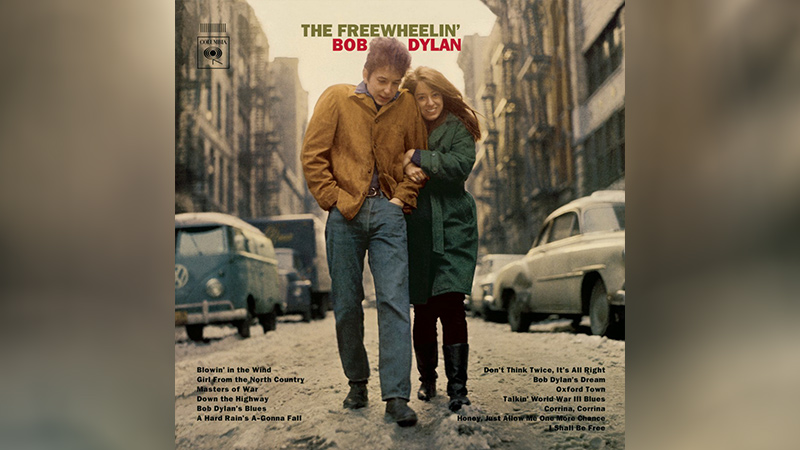
Release Date: May 27, 1963
Backstory: The Album that Launched a Generation
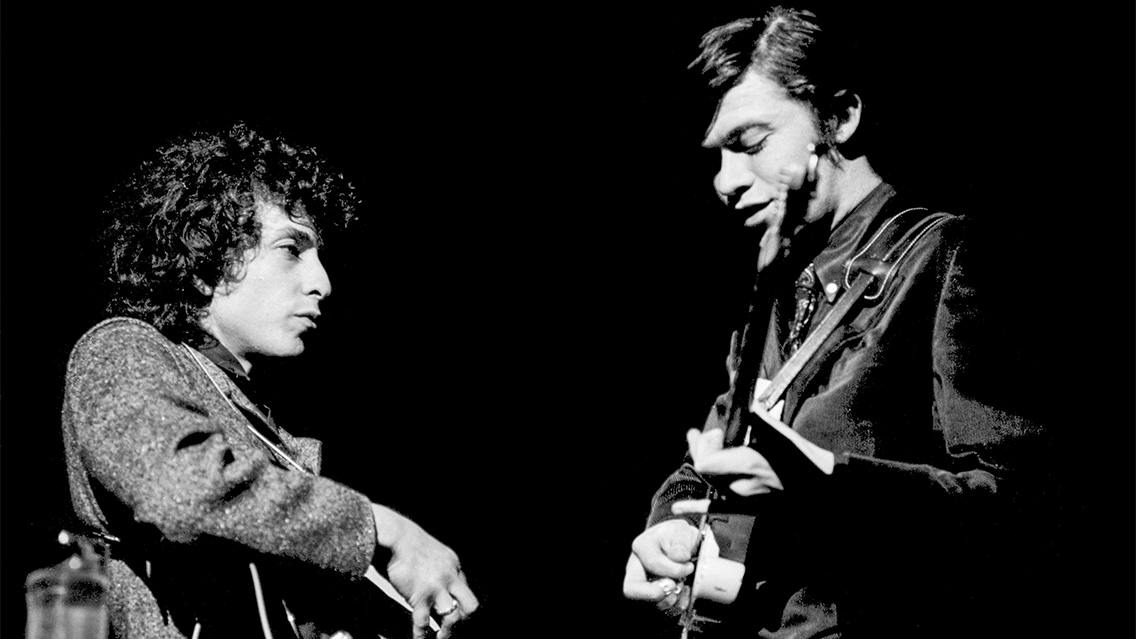
At just 22 years old, Bob Dylan — born Robert Zimmerman and once briefly performing under the name Elston Gunn — released his second studio album, “The Freewheelin’ Bob Dylan.”
Unlike his 1962 self-titled debut, “Bob Dylan,” which featured only two original songs, 11 of the 13 tracks on “The Freewheelin’ Bob Dylan” were Dylan originals. The album propelled him into the national spotlight and marked the beginning of his rise as a defining songwriter of the 1960s. Although often labeled “the voice of a generation,” Dylan himself famously rejected the title.
Prior to this release, Dylan was largely unknown outside New York City’s competitive folk scene. His debut album sold roughly 5,000 copies in its first year. But “The Freewheelin’ Bob Dylan” introduced audiences to his incisive political commentary, poetic surrealism, and deeply personal reflections on love and loss.
John Lennon later recalled hearing the album for the first time in 1964: “In Paris in 1964 was the first time I ever heard Dylan at all. Paul got ‘The Freewheelin’ Bob Dylan’ from a French DJ. For three weeks in Paris, we couldn’t stop playing it.”
The album peaked at No. 22 on the Billboard 200 and reached No. 1 in the United Kingdom. In 2002, it was selected by the Library of Congress for preservation in the National Recording Registry as one of the first 50 recordings to receive the honor.
Enter Peter, Paul and Mary — and Joan Baez
Just weeks after the album’s release, Peter, Paul and Mary, who shared manager Albert Grossman with Dylan, recorded a version of “Blowin’ in the Wind.” Reportedly recorded in a single take, their rendition became an international hit, peaking at No. 2 on the Billboard Hot 100 in 1963.
Around the same time, Dylan appeared alongside Joan Baez at the Newport Folk Festival. Baez, already an established figure in the folk revival, helped amplify Dylan’s growing reputation. The combined momentum of radio airplay, festival performances, and cover versions significantly elevated Dylan’s profile.
The Story Behind the Iconic Cover
The album’s cover features a now-famous photograph of Dylan walking arm-in-arm with then-girlfriend Suze Rotolo in New York City’s West Village. The image was captured by Columbia Records photographer Don Hunstein during the winter of 1963.
Rotolo had a profound creative influence on Dylan. While the two shared an apartment, he wrote much of “The Freewheelin’ Bob Dylan.” When Rotolo traveled to Italy to study art, her absence inspired songs such as “Down the Highway,” which includes the lyric, “Lord, I really miss my baby/She’s in some far-off land.”
“Don’t Think Twice, It’s All Right” similarly reflects on heartbreak and acceptance, capturing Dylan’s early mastery of emotionally resonant songwriting.
Credits
Bob Dylan (guitar, harmonica, piano, vocals)
Howie Collins (guitar)
Leonard Gaskin (bass)
Bruce Langhorne (guitar)
Herb Lovelle (drums)
Dick Wellstood (piano)
John H. Hammond (producer)
Tom Wilson (producer)