The Notorious B.I.G.: The Life, Music, and Lasting Legacy of Biggie Smalls
Explore the life and legacy of The Notorious B.I.G. and how Biggie Smalls became one of hip-hop’s greatest icons.

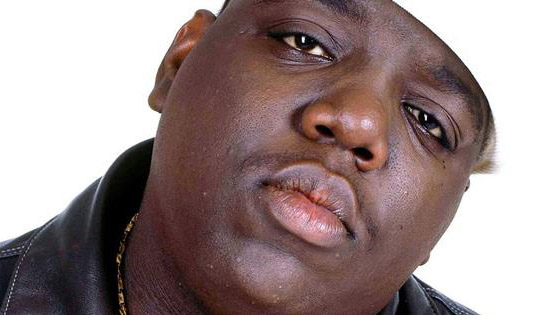
Ask anyone to name the five greatest rappers of all time, and The Notorious B.I.G. is almost always near the top of the list. Larger than life in both presence and talent, he embodied every quality associated with a legendary emcee: delivery, flow, lyrical precision, masterful storytelling, and undeniable charisma. Decades after his death, he remains lauded, idolized, and beloved by the hip-hop community and millions of fans worldwide.
From Christopher Wallace to Biggie Smalls
Born Christopher Wallace in Brooklyn, NY, Biggie Smalls was raised in the Bedford-Stuyvesant neighborhood. As a teenager, he became involved in drug dealing, but his passion for rap ultimately redirected his focus toward music.
His breakthrough began with a demo tape that caught the attention of Sean Combs, then an A&R executive at Uptown Records. After leaving Uptown to launch Bad Boy Records, Combs signed Biggie, beginning a partnership that would reshape East Coast hip-hop in the 1990s.
In 1993, Biggie gained wider exposure by appearing on remixes of Mary J. Blige’s singles “Real Love” and “What’s the 411?” He also appeared on the soundtrack to the film “Who’s the Man?” with his solo single “Party and Bullshit.”
‘Ready To Die’ and the Rise of a Superstar
Released in September 1994, Biggie’s debut album, “Ready To Die,” transformed Bad Boy Records into a dominant force in rap and R&B and established Biggie Smalls as a household name.
The album showcased his vivid storytelling, sharp lyricism, and effortless flow over polished, hard-hitting production. The single “Juicy” reached No. 27 on the Billboard Hot 100 and No. 14 on the Hot R&B/Hip-Hop Songs chart. “Big Poppa” climbed to No. 6 on the Hot 100 and No. 1 on the R&B chart.
“One More Chance/Stay With Me,” featuring Faith Evans, became a major crossover hit, reaching No. 2 on the Billboard Hot 100 and No. 1 on the R&B chart. By March 1995, “Ready To Die” was certified platinum by the Recording Industry Association of America (RIAA), and it has since achieved multi-platinum status.
Tracks such as “Unbelievable,” “Machine Gun Funk,” “Everyday Struggle,” and “Me & My Bitch” did not chart as high as the singles, but they became enduring fan favorites and critical standouts.
Collaborations and Expanding Influence
As his fame grew, Biggie became one of the most sought-after rappers in the industry. He collaborated with Michael Jackson on “This Time Around” from the album “HIStory: Past, Present and Future, Book I,” and appeared on “(You To Be) Be Happy” with R. Kelly.
He also formed the Brooklyn-based group Junior M.A.F.I.A. and executive-produced Lil’ Kim’s debut album “Hard Core,” helping launch her career.
The East Coast-West Coast Rivalry
Biggie’s success coincided with escalating tensions between East Coast and West Coast hip-hop. His relationship with Tupac Shakur deteriorated after Tupac was shot in a 1994 robbery at a New York recording studio and publicly accused Biggie and Combs of prior knowledge, which they denied.
The feud intensified through diss tracks, including Tupac’s “Hit ’Em Up.” Following Tupac’s murder in a drive-by shooting in Las Vegas in September 1996, speculation and conspiracy theories circulated widely, though no evidence ever linked Biggie to the crime.
‘Life After Death’ and a Tragic Loss
Amid mounting tension, Biggie began working on his sophomore album, “Life After Death.” Tragically, on March 9, 1997, at just 24 years old, he was shot and killed in Los Angeles after attending a Soul Train Music Awards after-party. His murder remains unsolved.
Released in March 1997, just weeks after his death, “Life After Death” debuted at No. 1 on the Billboard 200 and the Top R&B/Hip-Hop Albums chart. The double album sold nearly 700,000 copies in its first week and was later certified Diamond, signifying more than 10 million units sold in the United States.
The album featured chart-topping hits such as “Hypnotize” and “Mo Money Mo Problems,” as well as standout tracks like “Sky’s The Limit” and “I Love The Dough,” featuring Jay-Z and Angela Winbush.
Posthumous releases followed, including “Born Again” in 1999 and “Duets: The Final Chapter” in 2005.
A Legacy that Endures
In a career that spanned only a few short years, The Notorious B.I.G. reshaped the sound of hip-hop with his unmatched flow, razor-sharp lyricism, and vivid storytelling. He set a standard that few artists have equaled.
More than two decades later, his music continues to influence new generations of rappers, and his place among the greatest artists in hip-hop history remains secure. His legacy is not just preserved in albums and accolades, but in the lasting cultural impact he left on the genre.