What Makes the Philadelphia Orchestra Sound So Special?
Discover how the Philadelphia Orchestra’s unmistakable sound continues to move audiences — sometimes to tears.

In the classical music world, we often hear that many people’s first encounter with classical music was with cartoons, often starring the legendary Classical Music Impresario, Bugs Bunny. These days, people’s first encounter with classical music might be in commercials. We love the Super Bowl, where those million-dollar shorts often have a classical soundtrack.
|
“Symphony Hall Presents the Philadelphia Orchestra” features internationally renowned pianist soloists Lang Lang, Emanuel Ax, Yuja Wang, and Daniil Trifonov, and universally celebrated violinists Joshua Bell, Hilary Hahn, and Gil Shaham. Maestro Nézet-Séguin is cohost and commentator, offering his own special insight into the music being performed. Stream the latest episodes on demand on the SiriusXM app, and listen on Symphony Hall on Mondays at 7pm ET, Thursdays at 12am ET/Wednesdays at 9pm PT, and Saturdays at 6pm ET. |
Getting back to the cartoons, probably the most famous cartoon of all time starred Mickey Mouse, and it, too, depended on classical music by composers including Dukas (“The Sorcerer’s Apprentice”), Stravinsky (“The Rite of Spring”), Bach (“Toccata and Fugue in D Minor”) and Debussy (“Clair de lune”).
“Fantasia” had one additional star: the Philadelphia Orchestra and its iconic conductor, Leopold Stokowski. Maestro Stokowski conducted the orchestra in seven of the classical works heard during the film.
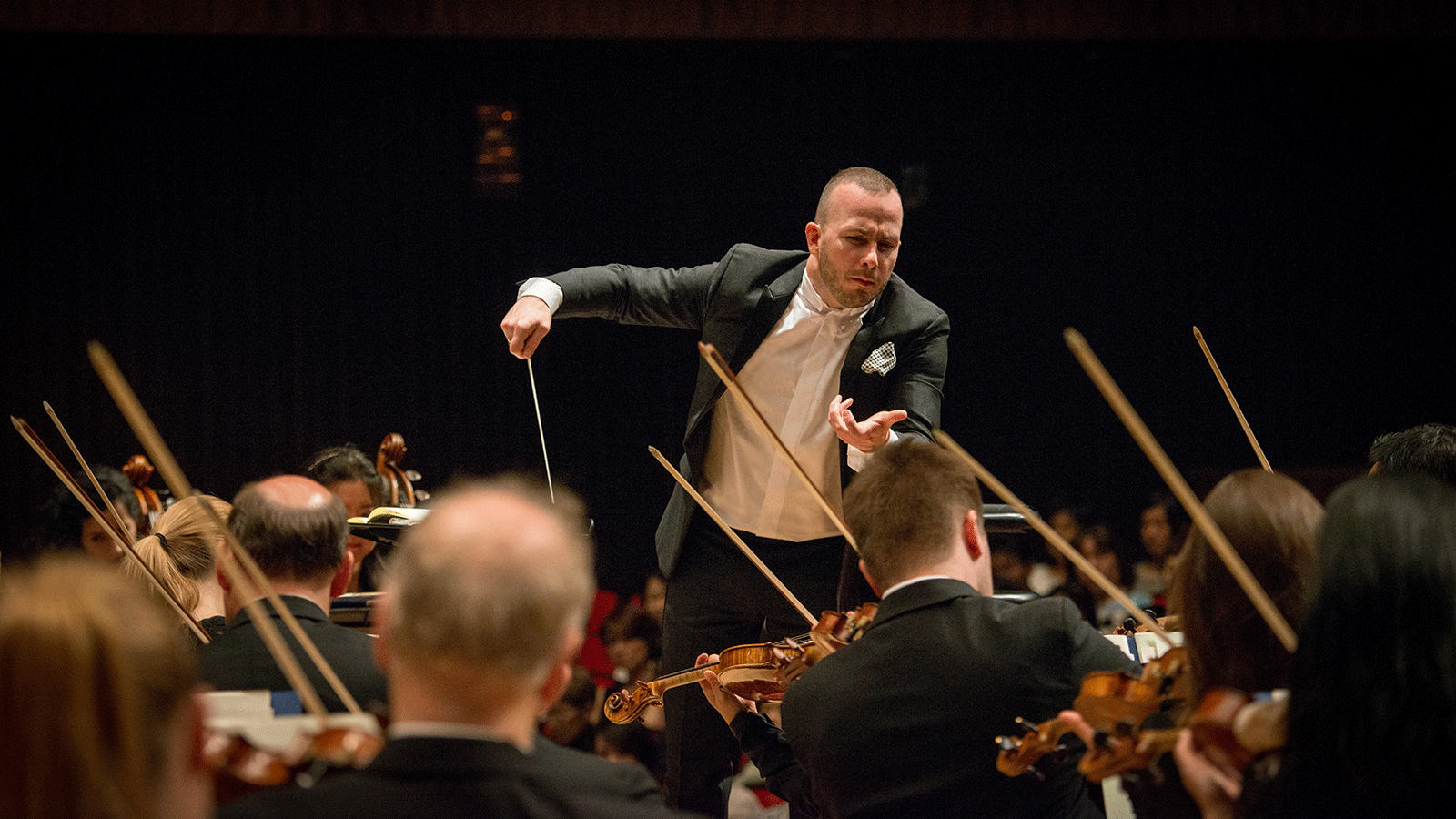
Before, during, and after the time of “Fantasia,” the Philadelphia Orchestra was considered one of the finest orchestras in the world. It still is, especially under the leadership of its Conductor and Music Director, Yannick Nezet-Seguin.
Each of the world-class orchestras, and any orchestra with high artistic integrity, has its own personality. With few exceptions, no two orchestras sound alike. There are elements that each orchestra owns that set them apart from the other. The Chicago Symphony Orchestra has its sonorous brass section. The Cleveland Orchestra celebrates a wonderful woodwind tradition. The New York Philharmonic… is the New York Philharmonic.
What sets the Philadelphia Orchestra apart? Its sound.
Of course, its sound sets it apart; sound sets all orchestras apart. But there has always been something striking about the sound of this orchestra — so arresting that the orchestra’s brand and primary marking is something the universe dubbed “The Philadelphia Sound.”
I rarely dwell on superlatives, clichés, or hype of any kind, but when it comes to the Philadelphia Sound, we are on hallowed ground. What is that special sound that no other orchestra on earth purveys? I would prefer to punt and say that you’ve got to hear it for yourself. And when you do hear it, you’ll surely know.
I will try to point to the one source of the Philadelphia Sound. It’s the sheen of the strings, the violins especially. More than just lush and full-bodied, when you hear the orchestra play Ravel or Rachmaninov, Mozart or Bach, Gershwin or Debussy, you will likely experience what the French call “frisson,” that streak of sensual electricity that dashes up your spine. Not goosebumps (they come later), but more like a flutter that makes you go lightheaded.
That’s the Philadelphia Sound, or maybe better called “The Philadelphia Sound Affect.”
When I took my favorite concert partner to her first performance by the Philadelphia Orchestra at the Kennedy Center, we were being ravished by their performance of the “Symphonic Dances” by Sergei Rachmaninov. Midway through, I looked over at her and saw that she was crying. I whispered, “What’s wrong? Are you okay? What’s going on?”
Tears streaming down her cheeks, she answered, “The Philadelphia Sound.”
Boom.
You may not cry tonight, or over the next 52 weeks of exclusive concerts by the Philadelphia Orchestra on SiriusXM’s Symphony Hall, but I do believe you will hear, feel, and be transported by the entrancing sounds you’ll experience from the entire orchestra.
May the Sound be with you.