The Story Behind Radiohead’s 1997 ‘OK Computer’ Album
The album tackled the technophobia and trepidations of life in the 21st century.

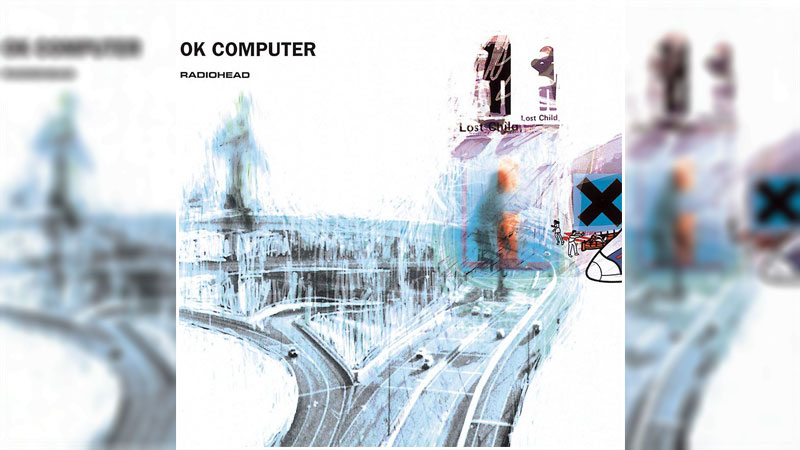
“OK Computer,” widely heralded as one of the greatest albums of the ‘90s and beyond, is the third studio effort released by English alt-rock band Radiohead.
U.S. Release Date
July 1, 1997
Backstory
While the group’s sophomore record, the guitar-centric “The Bends,” largely featured melancholic introspection, the more surreal “OK Computer” tackled the technophobia and trepidations of life in the 21st century and marked a departure into more avant-garde musicianship that would define Radiohead’s later work.
The 12-track album (released on Parlophone and Capitol Records) was recorded between 1996 and early 1997, with the catalyst for its creation coming in the fall of 1995 after musician and producer Brian Eno commissioned the band to write and record a song for the charity record “The Help Album,” organized by War Child (which helps children in areas of conflict). The resulting track, “Lucky,” was recorded in a single day with The Bends producer John Leckie and engineer Nigel Godrich. That September afternoon would mark the beginning of Godrich’s place as Radiohead’s “sixth member”; from “OK Computer” on, he produced each of the band’s seven records — including this year’s “A Moon Shaped Pool.”
Sharing the producer’s credit with Godrich wasn’t always the plan, though; in fact, the commercial success of The Bends gave the band the confidence to take a stab at self-producing.
“I think there’s a real discipline that you have to learn when you produce yourself, which took us a while,” drummer Phil Selway said in a 1997 interview. “We pretty much had a scatter technique with our recording … the stupid thing was that we were nearly finished when we’d move on [from a song], because so much work had gone into them.”
Godrich was able to reel the band in, offer a necessary outsider’s perspective, and aid them in the creation of a record well ahead of its time that would go on to win a GRAMMY and find an archived home in the Library of Congress’s musical canon.
Thanks, Dr. Quinn, Medicine Woman
During the summer of 1996, Radiohead’s five members felt a change of scenery imperative to their creative success, so they left their Oxfordshire studio, Canned Applause (a converted shed near their respective homes), and relocated to a historic mansion in Bath.
The home, called St. Catherine’s Court and owned by actress Jane Seymour (who was gone filming her television show), was “less like a laboratory experiment, which is what being in the studio is like,” as guitarist Johnny Greenwood said in a ‘97 interview with “Request” magazine.
Frontman Thom Yorke continued, “It’s about as far removed as you could get without going to a deserted island,” adding, “The house had the most incredible sound signature to it … It was a kind of enforced exile really.”
Fitter, Happier
Described by Thom Yorke as the “most upsetting thing” he’s ever written, the digitized voice reciting the lyrics on the 7th track of “OK Computer” is often mistakenly attributed to Stephen Hawking. Actually, though, Yorke used the Macintosh SimpleText program to record the haunting lyrics, “More productive/comfortable/not drinking too much/regular exercise at the gym (3 days a week)/getting on better with your associate employee contemporaries/at ease,” etc.
OK Rainbows
Radiohead fans have debated a theoretical (but seemingly probable) “easter egg” since the release of the band’s seventh album, 2007’s “In Rainbows.”
The announcement of the record’s release date was made just 10 days before the album became available (in a before-its-time “pay what you want” model) on October 10, 2010. Plus, given that the working title for “OK Computer” was “Zeroes and Ones” and that the 10-track “In Rainbows” title consists of 10 letters, many believe the records are meant to represent a binary code of ones and zeroes and compliment each other if you play the tracks together in alternating fashion, starting with the first “OK Computer” track, “Airbag,” and continuing with the first “In Rainbows” track, “15 Step,” and so on, with “Karma Police” and “Fitter Happier” pairing together.