Kris Kristofferson: The Outlaw Poet Who Transformed Country Music
His work reshaped country music’s lyrical boundaries and helped define the outlaw movement’s ethos of independence and honesty.
From Texas Roots to Nashville Disruptor
Kris Kristofferson, born June 22, 1936, in Brownsville, TX, emerged as one of the most influential figures in modern country music. A Rhodes Scholar, former U.S. Army captain, and helicopter pilot before fully committing to songwriting, Kristofferson brought an intellectual depth and literary sensibility to a Nashville scene that, at the time, was dominated by the polished “Nashville Sound.”
His arrival in the late 1960s coincided with a shift in country music. Alongside artists who would soon be associated with the outlaw country movement, Kristofferson helped challenge the genre’s commercial constraints, emphasizing raw emotion, poetic storytelling, and stripped-down authenticity.
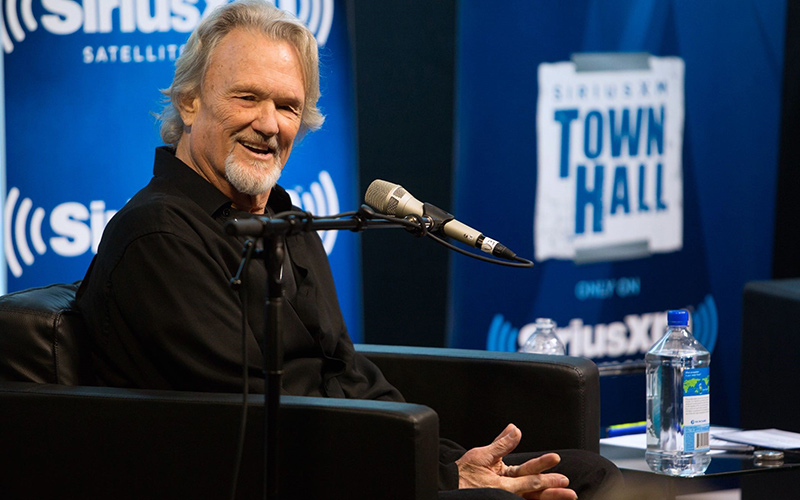
As Outlaw Country host Mojo Nixon once said at a 2013 SiriusXM Town Hall in Nashville, “Nashville didn’t change Kris Kristofferson, he changed Nashville.”
One of Country Music’s Greatest Songwriters
Although Kristofferson released dozens of albums as a recording artist, his earliest and perhaps most far-reaching impact came through songs recorded by others. His compositions became era-defining hits, including “Me and Bobby McGee” (famously recorded by Janis Joplin), “Help Me Make It Through the Night,” “For the Good Times,” and “Sunday Mornin’ Comin’ Down,” the latter of which became closely associated with Johnny Cash.
His writing blended vulnerability, spiritual searching, romantic realism, and social commentary. The emotional directness of his lyrics helped usher in a new era of country music, one that made space for flawed narrators and complicated truths.
The Highwaymen and Outlaw Country
In the 1980s, Kristofferson joined forces with Johnny Cash, Waylon Jennings, and Willie Nelson to form the country supergroup The Highwaymen.
The group embodied the outlaw spirit that had been building throughout the 1970s, favoring creative control and artistic independence over industry convention. Their success further cemented Kristofferson’s status as both a pioneer and an elder statesman of the movement.
A Successful Film Career
Kristofferson’s talents extended well beyond music. He built an accomplished acting career, appearing in dozens of films across several decades. He starred opposite Barbra Streisand in the 1976 version of “A Star Is Born,” earning a Golden Globe Award for Best Actor. He later appeared in films such as “Blade,” its sequels, and the 2001 remake of “Planet of the Apes.”
His on-screen presence reflected much of what defined his songwriting persona: rugged, introspective, and quietly commanding.
Later Work and Enduring Influence
Even into his later years, Kristofferson continued to record and release music. Albums such as “Feeling Mortal” (2013) and “The Cedar Creek Sessions” (2016), recorded in Austin, TX, revisited many of his most enduring songs with a reflective tone. Legacy Recordings also honored his career with “The Complete Monument & Columbia Album Collection,” a comprehensive box set documenting his prolific output.
In the mid-2010s, Kristofferson revealed that symptoms previously attributed to Alzheimer’s disease were actually the result of Lyme disease, a treatable condition. The diagnosis brought clarity and relief after years of uncertainty.
A Lasting Legacy
Inducted into the Country Music Hall of Fame in 2004, Kristofferson remains widely regarded as one of the greatest songwriters in American music history. His work reshaped country music’s lyrical boundaries and helped define the outlaw movement’s ethos of independence and honesty.
From poetic ballads to rebellious anthems, Kris Kristofferson’s catalog continues to influence generations of songwriters and performers. His legacy is not simply that of a hitmaker, but of a storyteller who expanded what country music could say — and who it could speak for.