














Gordie Howe: The Enduring Legacy Of ‘Mr. Hockey’
Howe’s legacy is not defined solely by statistics or championships, but by the standard he set for generations of players who followed.

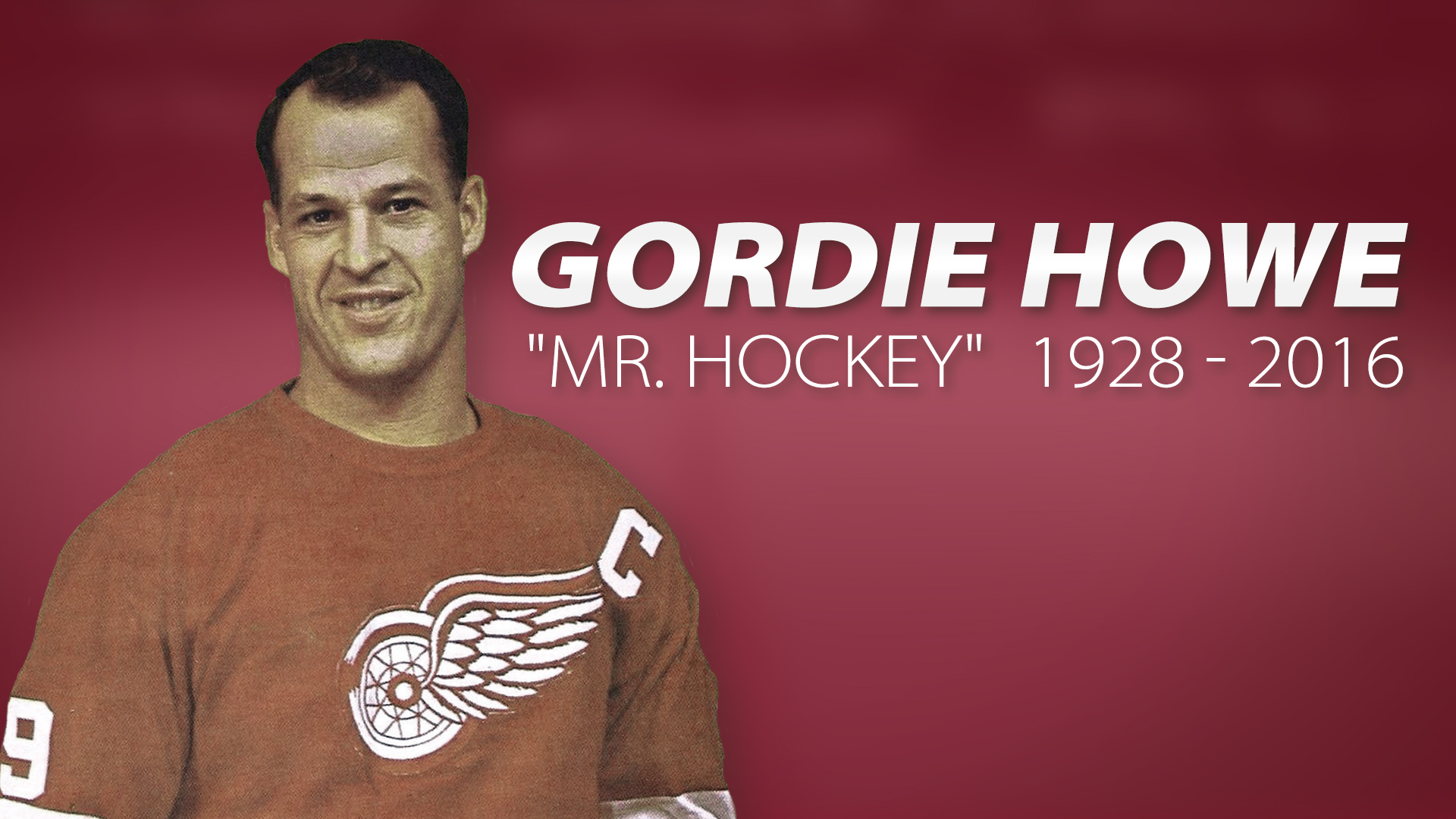
Gordie Howe’s name remains synonymous with hockey greatness. Across generations, from longtime fans to modern superstars, he has been celebrated not only for his longevity and records but for the all-around excellence that earned him the enduring nickname “Mr. Hockey.”
Born on March 31, 1928, in Floral, Saskatchewan, Gordie Howe grew up in nearby Saskatoon during the Great Depression. He began playing organized hockey at age eight and quickly stood out for his strength, balance, and determination. By his mid-teens, the six-foot-one right winger had drawn the attention of NHL scouts. The New York Rangers invited him to training camp at age 15, but he did not sign with the club. Instead, the Detroit Red Wings recognized his potential and added him to their organization.
Howe made his NHL debut with Detroit during the 1946–47 season at age 18, scoring a goal in his first game. That goal was the first of 801 regular-season goals he would score in the NHL. Early in his career, he switched to the No. 9 sweater that would become iconic in hockey lore.
Over 26 NHL seasons — primarily with Detroit — Howe built one of the most remarkable résumés in professional sports. He played 1,767 regular-season games, recording 1,850 points (801 goals, 1,049 assists), along with 160 points in 157 playoff games. During Detroit’s dynasty years in the 1950s, he helped lead the Red Wings to four Stanley Cup championships (1950, 1952, 1954, 1955).
Individually, Howe’s achievements were equally staggering. He won six Hart Trophies as the NHL’s most valuable player and six Art Ross Trophies as the league’s leading scorer. He was named to the NHL First All-Star Team 12 times and the Second All-Star Team nine times. His combination of scoring touch, physical strength, durability, and defensive awareness made him the prototype of the complete hockey player.
As a cornerstone of Detroit’s famed “Production Line” alongside Ted Lindsay and Sid Abel, Howe became the most recognizable figure in the sport. He competed fiercely against legends such as Maurice “Rocket” Richard, earning both the respect of teammates and the grudging admiration of opponents. Known for his toughness as much as his skill, Howe played in an era without helmets and overcame a serious skull fracture during the 1950 playoffs to continue his Hall of Fame career.
Howe initially retired from the NHL in 1971 and was inducted into the Hockey Hall of Fame in 1972, with the mandatory waiting period waived. Yet retirement proved temporary. In 1973, he joined the World Hockey Association’s Houston Aeros, skating alongside his sons, Mark and Marty Howe. Far from being a ceremonial appearance, Howe scored 100 points in his first WHA season and helped lead the Aeros to back-to-back Avco World Trophy championships in 1974 and 1975.
The Howe family later moved to the New England Whalers. When four WHA teams merged into the NHL in 1979, Howe returned to the NHL with the Hartford Whalers for one final season. At age 52, he recorded 15 goals and 41 points, becoming one of the oldest players in NHL history and extending his professional career across five decades.
When discussions arise about the greatest hockey player of all time, Howe’s name remains central to the conversation. Legends such as Wayne Gretzky and Bobby Orr have spoken reverently about his impact on the game. His influence endures not only in the record books, but in the style of play he embodied — skilled, relentless, and fiercely competitive.
Gordie Howe’s legacy is not defined solely by statistics or championships, but by the standard he set for generations of players who followed. In arenas across North America, and in conversations about hockey’s history, “Mr. Hockey” remains a benchmark for greatness.